


Can We Finally Get a Cert II in Arboriculture?
Reaching young people early could be the key to tackling arboriculture’s skills shortage
The arboriculture industry has talked for years about the need to attract more young people. But if students don’t know arboriculture exists as a career while they are still at school, how can we expect them to choose it?

For long-time ArbWest Committee member Joly Elliott, attracting young people into arboriculture is one of the most important issues facing the industry.
Joly has been involved in arboriculture training and education for many years and believes the industry needs a much clearer entry point for school-aged students.
Joly and former ArbWest President Royce Turner (now Vice Chair of Arboriculture Australia) have been working on a curriculum for a Certificate II in Arboriculture for several years. Joly is now in contact with Skills Insight about the possibility of including arboriculture within a new Green Skills training package.
“For me, this is the most important thing in our industry at the moment – attracting young people into arboriculture. We still have a massive skills shortage, and the only way to solve it is to catch our youth early,” Joly said.
His preference is clear: he would like to see a Certificate II specifically in arboriculture, giving young people an opportunity to experience the industry before committing to an apprenticeship or Certificate III. “But I’ll take it any way it comes, if it’s bundled with other areas in a Green Skills package that would work too,” he said.

Royce Turner also believes a Certificate II should be an integral part of the industry’s future.
“If we don’t get something like a Cert II off the ground, we’re going to keep missing the opportunity to bring the right people into arboriculture at the right age,” Royce said.
“We need to reach young people much earlier, while they are still at school and thinking about what they want to do. Arboriculture needs to be presented alongside the other trades as a genuine career option – as there are so many wonderful opportunities out there.”
“A Cert II would give young people that first step into the industry and a chance to discover arboriculture before committing to an apprenticeship or Certificate III.”
The challenge is not simply creating another qualification. It is creating an early pathway into an industry many teenagers may not even know exists.
We need to show them, not just tell them

That is something Sascha Seifritz, Lead Trainer – Arboriculture & Vegetation at RelyOn, also believes strongly.
For Sascha, connecting young people with arboriculture needs to begin with practical experiences.
“Simply telling young people that arboriculture is a career option isn’t enough – we need to show them what the industry actually looks like.”
That could mean getting arborists and training providers directly into schools with

presentations, tree climbing days, practical activities, equipment demonstrations, tree identification and habitat creation.
Imagine students seeing professional climbers in a tree, watching a rigging demonstration, learning how arborists create habitat for wildlife or getting their first opportunity to try an arboriculture-related activity themselves.
For some, that could be the moment that sparks an entirely new career direction.
Sascha believes schools, training providers, employers and industry associations could work more closely to create structured school engagement days.
“The most important part is inspiring the students and opening their eyes to what is possible. That comes through practical demonstrations, participation and getting industry people into schools.”
Importantly, there also needs to be somewhere for that initial enthusiasm to lead.
At present, Sascha says a young person interested in trees can gain basic industry experience or introductory training before progressing into an arboriculture apprenticeship and Certificate III in Arboriculture.
From there, the possibilities expand into climbing, pruning, tree dismantling and rigging, tree assessment, plant health care, utility vegetation management and specialist fields such as habitat creation and habitat tree management.
Further qualifications can lead into consulting, supervision, training and management.
In other words, arboriculture can offer far more than simply “pruning trees”. But young people need an opportunity to discover that.
Creating a love of trees even earlier
Perhaps building the next generation of arborists can start even before students begin thinking about careers.
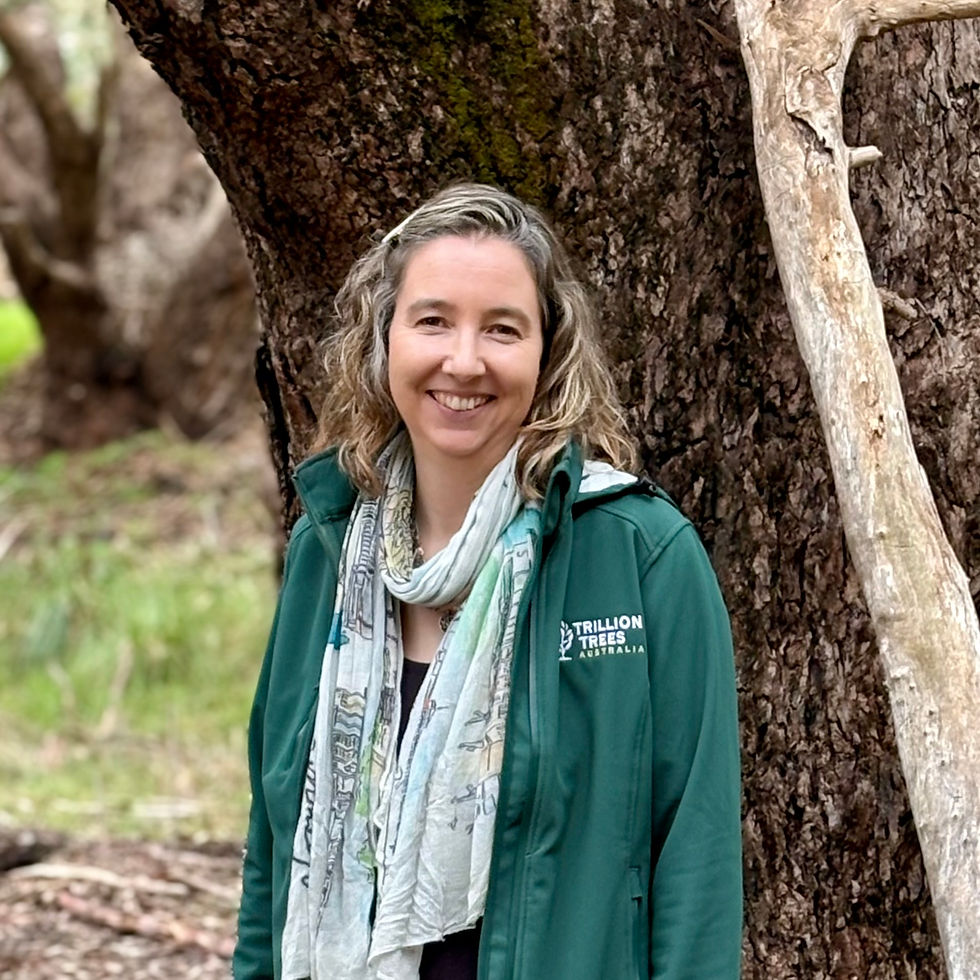
Trillion Trees’ SPROUT! program has spent four decades introducing young people to trees and the environment.
According to Kate Herren, Fundraising and Communications Coordinator at Trillion Trees, the program has connected with more than 80,000 young people and helped them plant more than 2.5 million trees over the past 40 years.
The aim is not specifically to recruit arborists. It is to develop the next generation of environmental champions by building an understanding of trees, biodiversity and healthy ecosystems.
“We talk a lot about why we love trees; for

shade, for wildlife and for our own wellbeing, because we want to develop a love of trees in the next generation,” Kate said.
SPROUT! engages younger children through hands-on activities including making insect hotels and seed bombs, while older students can take part in work experience and volunteering at the Trillion Trees community nursery in Hazelmere, WA.
There, students can learn about native plant propagation and care, seed collection, grounds maintenance and site preparation. Senior students from Guildford Grammar School are currently visiting regularly as part of their service learning curriculum.
These experiences may not immediately produce an arborist, but they do something equally important: they introduce young people to working outdoors, caring for trees and understanding the environment.
That interest could become the starting point for a career.
For an industry that is in desperate need of skilled people, getting a Certificate II pathway available to young students could be an important piece of the puzzle.
As Joly Elliott puts it, we need to catch our youth early.


Comments